

The short answer: watch where water comes from, goes and stops
Check a proposed planting bed during or just after ordinary Lower Mainland rain. Trace roof and paving runoff, note puddles that remain after the surrounding ground has drained, and inspect soil below the surface. Moist soil can support excellent planting; soil that stays saturated, receives concentrated discharge or traps water against a structure needs a site solution before new trees and shrubs arrive.
- Observe more than once. One extreme storm can overwhelm almost any site; a repeated pattern after normal rain is more useful.
- Follow the source. A low spot, a downspout and compacted subsoil are different problems even when they produce the same puddle.
- Look below the mulch. Surface dryness does not prove that the root zone has air.
- Pause near buildings. Do not redirect or store water beside a foundation, retaining wall or neighbouring property without a proper drainage plan.
Surrey and Langley gardens often move from prolonged cool-season rain to a much drier summer establishment period. That makes drainage advice easy to oversimplify. “Clay soil” does not automatically mean an unusable yard, and adding a layer of gravel or a bag of compost to one planting hole does not automatically fix water movement.
The practical question is whether the whole rooting area has a workable balance of water and air. Washington State University describes drainage, infiltration, compaction, rooting depth and aeration as separate soil-quality indicators. Check them as a system before choosing material at the nursery.
Start with repeatable warning signs, not one dramatic puddle

Walk the property while it is raining, then return several hours later and again the next day. Mark the wettest edges rather than relying on memory. A shallow puddle that clears with the rest of the lawn is different from a bed that remains soft and airless long after nearby ground is workable.
Surface clues
Repeated ponding, runoff cutting across mulch, moss alone in exposed turf, or a greasy sealed surface can point to slow infiltration or concentrated flow. No single clue proves the cause.
Plant clues
Weak growth, yellowing and root decline may occur in poorly aerated soil, but similar symptoms can come from planting depth, drought, disease or nutrient problems. Inspect roots and site history before blaming drainage.
Construction clues
Newer lots may have thin topsoil over compacted subsoil, buried debris or traffic pans that redirect water sideways. The surface layer can look good while roots meet a restrictive layer below.
Seasonal clues
A bed can be saturated in February and dry in August. Record both conditions because the selected plant and irrigation plan must tolerate the full cycle.
Trace roof, paving and uphill runoff before testing the soil

Water on the ground may not have fallen there. Watch downspouts, sump outlets, driveway edges, patios, retaining-wall drains and slopes above the bed. Sketch arrows showing where water enters and where it can safely leave. A soil amendment cannot compensate for a downspout continually delivering roof water into one root ball.
- Confirm that gutters and outlets are functioning before diagnosing the landscape.
- Keep runoff from being directed onto neighbouring property or trapped against structures.
- Look for hard surfaces that shed water toward a planting strip faster than the soil can absorb it.
- Check whether a retaining wall or raised hardscape intercepts natural subsurface flow.
A rain garden is engineered as a shallow planted facility with a defined inlet, storage volume, soil profile, overflow and safe relationship to buildings. Oregon State University distinguishes infiltration rain gardens, which allow water into suitable native soil, from filtration systems that collect and pipe water where infiltration is unsafe. A random wet bed beside a house should not be renamed a rain garden.
Read soil texture and structure separately

Clay, silt and sand describe mineral particle sizes. Structure describes how particles gather into aggregates and how pores connect between them. A clay soil with protected structure and organic matter can support healthy plants; the same texture smeared, compressed or worked while saturated may move water and air very poorly.
- Inspect several depths. Compare the cultivated surface, the intended root zone and the layer below it.
- Look for abrupt changes. A loose dark layer over dense pale subsoil can create a perched wet zone.
- Handle moist, not saturated, soil. Soil that breaks into stable crumbs behaves differently from a smooth mass that smears into a dense ribbon.
- Consider a laboratory test. A soil test can clarify pH, organic matter and nutrient conditions, but it does not replace observing grade and water movement on site.
WSU’s hedgerow guidance recommends using a hand-feel or jar method as an approximate texture check and testing drainage because texture provides only an initial indication. Do not make a planting promise from the word “clay” alone.
Check grade and the wider rooting area

Stand back from the proposed hole. Roots will extend far beyond the nursery container, so the relevant drainage area is the bed and adjoining soil—not a small pocket of improved backfill. Note low points, raised edges and places where paths or edging act like dams.
A planting-scale correction may be reasonable when
- water is not concentrated from a roof, drain or large paved area;
- the bed has a safe overflow route away from structures;
- the restrictive condition is shallow and can be improved across a broad bed;
- the chosen plant tolerates the measured seasonal moisture pattern.
Drainage or grading design comes first when
- water sits against a foundation or retaining wall;
- runoff crosses a property line or threatens a neighbour;
- an outlet, steep slope or high water table makes infiltration unsafe;
- the proposed fix depends on sending water somewhere unverified.
Do not bury trunks or crowns to make a plant “fit” a low spot. If raised planting is appropriate, the transition must be broad enough for roots and stable enough not to shed the root ball dry in summer.
Treat compaction across the bed, not only inside the hole
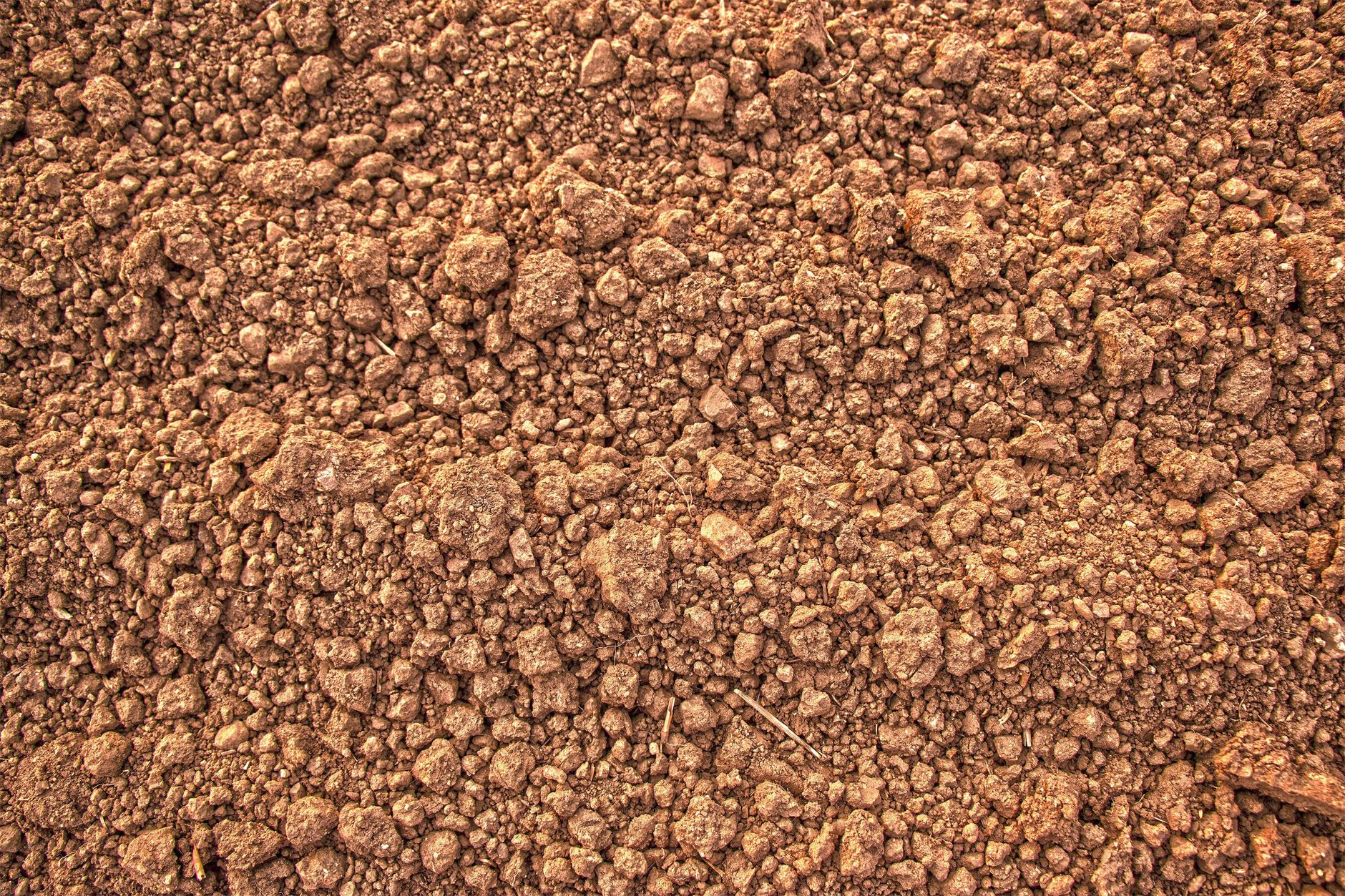
Construction traffic and repeated work on wet ground can collapse large pores. Digging one deep, soft hole in that soil may create a basin: water enters amended backfill readily, then drains slowly through the untouched sides and bottom.
Oregon State University advises planting trees and shrubs no deeper than the root ball and several times wider, loosening the surrounding surface soil rather than heavily amending one isolated hole. Its guidance warns that a sharply amended hole can encourage circling roots and waterlogging at the boundary with hard native soil.
- Work only when soil moisture allows it to fracture rather than smear.
- Expose the root flare and use that—not the pot rim—as the planting-depth reference.
- Improve a broad rooting zone where practical; avoid creating a flowerpot-shaped pocket.
- Add organic matter according to soil need and across the managed bed, not as an assumed cure for every drainage problem.
- After planting, use a broad shallow mulch layer and keep it off stems; see the tree and shrub mulching guide.
Choose plants only after defining the moisture pattern

“Likes moisture” is not the same as “survives stagnant, oxygen-poor soil.” Match the exact species and cultivar to light, mature size, summer irrigation and the duration—not just the presence—of winter moisture. Nursery tags remain important because plants sold under one broad common name may differ in size and tolerance.
- Moist but aerated: water is available, excess drains, and the root zone regains air after rain.
- Seasonally wet: saturation occurs during a predictable cool-season period, followed by a drier season.
- Frequently waterlogged: pores remain filled for extended periods and ordinary upland landscape plants are at high risk.
- Artificially flooded: a pipe, roof or paved catchment repeatedly concentrates more water than the area naturally receives.
Use Atkinson’s planting options as a starting point, then confirm each proposed plant against the measured site. Plant selection can work with a sound moisture regime; it cannot make unsafe runoff routing disappear.
Use clear proceed, redesign and stop-work criteria

Proceed with a planting plan when
- the source, path and outlet of ordinary runoff are understood;
- the root zone drains on a repeatable timeline suitable for the selected plant;
- planting depth and a broad rooting area can be maintained;
- summer watering can be supplied without keeping the soil continuously saturated.
Redesign or seek drainage advice when
- ordinary rain leaves the bed saturated after adjoining areas recover;
- water arrives from roofs, paving, uphill land or an unknown subsurface source;
- the only proposed outlet affects a building, wall, slope or neighbouring lot;
- deep compaction, buried debris or an abrupt soil layer confines the whole rooting area.
Bring rain-time photos, puddle outlines, downspout locations and a simple grade sketch to the design conversation. If the source or safe outlet is unclear, ask Atkinson Landscaping to assess the property before ordering trees and shrubs. The useful next step may be planting, broader soil preparation, drainage work or simply observing one more storm—but it should be based on evidence from the site.
References and further reading
- Washington State University: Urban Soil Management
- Washington State University: Soils, Drainage, Subsurface Water
- Oregon State University Extension: Rain Gardens: Low-impact Development Fact Sheet
- Oregon State University Extension: Improving Garden Soils with Organic Matter