

The short answer: match plants to the kind of shade, not the word “shade”
Watch the bed at several times of day, then check it again in another season. Record when direct sun reaches it, whether nearby trees will leaf out, how moist the root zone stays and how much root competition is already present. Choose plants only after those conditions are clear.
- Bright shade can support a wider range of shrubs and perennials than a dark space beneath dense evergreen branches.
- Morning sun is generally gentler than the same duration of hot late-afternoon exposure.
- Dry shade beneath mature trees is a moisture-and-root-competition problem as well as a light problem.
- Winter-wet shade needs drainage checked before a “shade tolerant” label means anything.
Shady beds are common beside Lower Mainland homes, fences, cedar hedges and mature trees. They are also easy to misread. A north-facing side yard may receive bright reflected light all day, while a bed that looks sunny in March can become deeply shaded when deciduous trees leaf out.
The Royal Horticultural Society separates light shade, partial shade, dappled shade, moderate shade and deep shade because plants respond to both the duration and intensity of light. Use those terms as observations, not as promises. Soil, water, mature size and maintenance still decide whether a planting will last.
Measure the light before shopping

Take photos or notes in the morning, around midday and late afternoon. Repeat the check after surrounding trees have a full canopy. A phone light meter can help compare locations, but a simple record of direct sun, bright sky and deep shadow is usually more useful than one reading.
Light or open shade
The bed sees bright sky and may receive a short period of gentle direct sun. Many woodland-edge plants can perform well if moisture and soil suit them.
Partial shade
Direct sun reaches the bed for part of the day. Note whether that exposure is cool morning light or stronger late-day heat against a wall.
Dappled shade
Small patches of sun move through a deciduous canopy. The pattern changes with wind, season and branch density.
Deep shade
Dense trees, buildings or evergreen hedges exclude most direct light. Foliage quality, spacing and restraint matter more than expecting abundant bloom.
Map how the shade changes through the year

Deciduous trees admit winter and early-spring light, then close the canopy as temperatures rise. This can favour bulbs and early woodland perennials that complete much of their display before summer shade deepens. Evergreen trees and tall hedges cast a more persistent shadow and often intercept rainfall as well.
- Mark the shadow line from the house, fence and hedge at different times.
- Note bright edges where shrubs may lean toward light if planted too tightly.
- Look for reflected heat and glare beside pale walls or paving; a shaded bed can still become hot and dry.
- Allow for future shade from newly planted trees and the mature spread listed for each cultivar.
Do not assume that a shade plant needs darkness. Many shade-tolerant plants still perform best in bright, indirect light or a few hours of gentle sun.
Separate dry shade from moist shade
Push aside mulch and inspect soil at root depth. Shade can slow evaporation, but tree roots, roof overhangs and dense hedges may keep a bed surprisingly dry. In another yard, the same lack of sun may combine with compacted soil and winter runoff to keep roots saturated.
Clues to dry shade
- large established trees or hedges occupy most of the rooting area;
- rain is intercepted by branches, eaves or a covered entry;
- soil becomes dusty below the surface soon after rain;
- new plants wilt even though the surrounding air feels cool.
Clues to wet or airless shade
- water remains after nearby beds have drained;
- downspouts, slopes or paving feed runoff into the area;
- soil smears when handled and has a dense structure below the surface;
- roots repeatedly decline despite frequent “shade plant” replacement.
Washington State University treats infiltration, drainage, compaction, rooting depth and aeration as separate soil-quality indicators. If puddling or concentrated runoff is part of the problem, use the yard drainage assessment guide before choosing plants.
Build layers around mature size and available light

Begin with the permanent structure: existing trees, walls, paths and views from the house. Add shrubs only where their mature height and width fit without repeated hard pruning. Then use lower perennials and groundcovers to connect the bed rather than filling every gap on installation day.
- Set the back layer. Choose a limited number of shrubs with a mature outline that fits under windows, eaves and tree branches.
- Keep a middle rhythm. Repeat compatible foliage forms or small groups instead of collecting one of everything.
- Cover the ground carefully. Allow room for spread and access; vigorous groundcovers are not automatically appropriate.
- Leave establishment space. A young bed can look open without being under-planted.
Rhododendrons are familiar shade-tolerant shrubs in this region, but they are not interchangeable. Cultivars vary greatly in mature size, and they still need suitable soil, moisture and light. Read the botanical name and cultivar on the nursery tag.
Use foliage as the dependable design layer

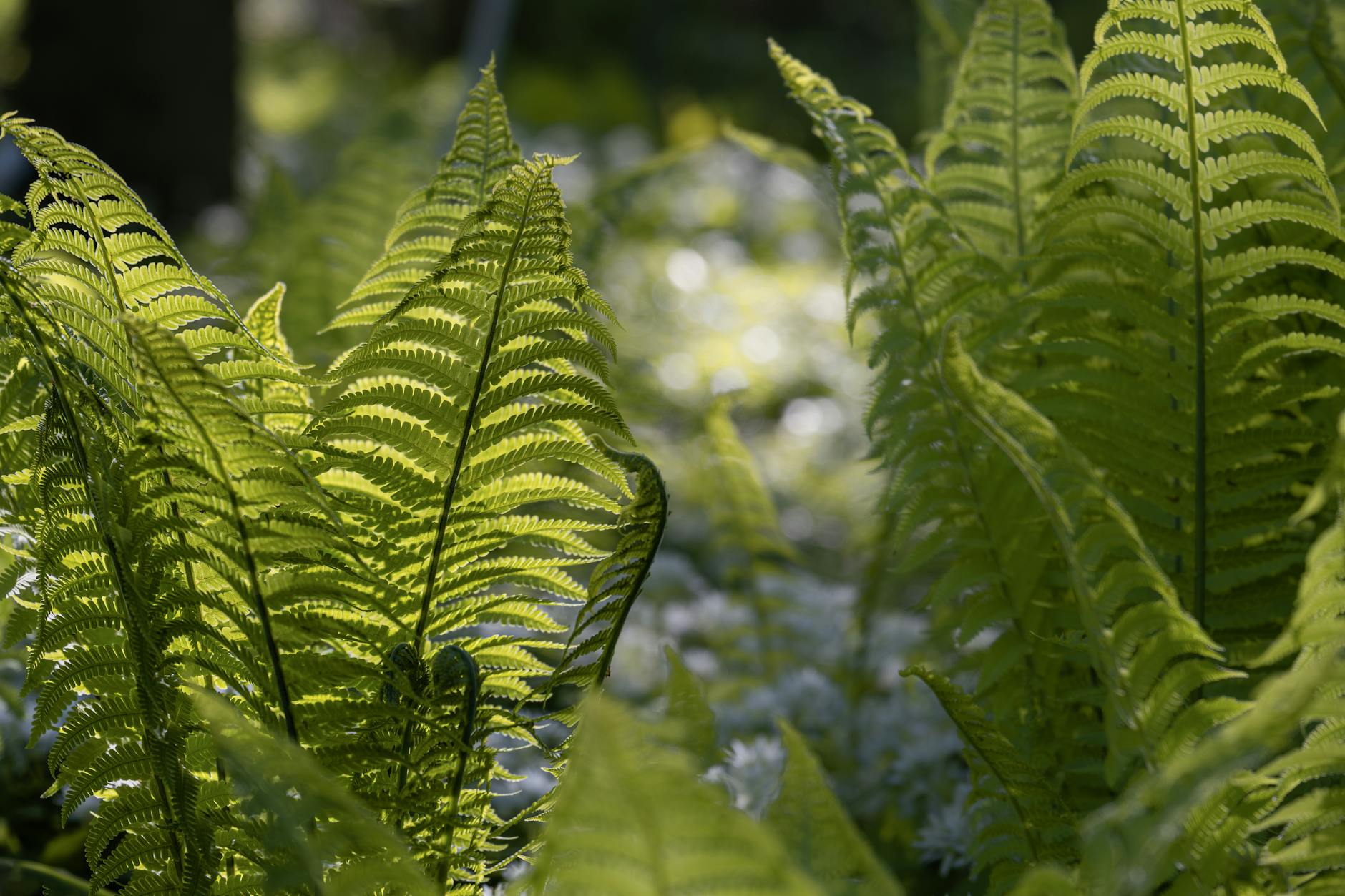
Flowers are seasonal. In shade, foliage usually supplies the longest-lasting structure. Combine broad leaves, fine fronds and simple evergreen forms without turning the bed into a catalogue. Light-coloured leaf margins can brighten a dark area, but variegation does not remove the plant’s soil and moisture requirements.
- Repeat two or three foliage shapes so the planting reads as one composition.
- Use flowers as timed accents rather than the only reason for choosing a plant.
- Check slug, deer and pet considerations without relying on absolute “proof” claims.
- Confirm whether a plant is native, non-native or a named cultivar; shade tolerance does not establish native status.
Before introducing an unfamiliar vigorous plant, check current provincial invasive-plant information. A plant being sold, shared or growing nearby is not proof that it is a responsible garden choice.
Protect tree roots and plan establishment watering

Mature trees create shade and already occupy the soil. Avoid deep cultivation, grade changes and large cuts through structural roots to force a new bed into place. Small planting pockets between roots are usually less disruptive than stripping or tilling the whole area.
- Do not pile new soil or mulch against trunks or over the root flare.
- Plant at the correct depth and keep amendments broad and moderate rather than creating isolated soft pockets.
- Water each new root ball directly during establishment; overhead rain may be intercepted by canopy.
- Check moisture before watering because cool shade can hide both drought and saturation.
- Keep practical access for pruning, leaf cleanup and inspection.
The plants and planting options page shows the wider service context, but final selections should follow the actual site and nursery label rather than a generic shade list.
Choose a plan you can maintain after the first season
Proceed with planting when
- the seasonal light pattern and root-zone moisture are documented;
- each plant’s mature dimensions fit the bed and access routes;
- existing tree roots can remain protected;
- establishment watering can reach the new root balls.
Simplify or investigate first when
- deep shade leaves no realistic flowering expectation;
- runoff, compaction or persistent saturation is unresolved;
- the design requires cutting major roots or burying tree bases;
- maintenance depends on constant pruning to hold oversized plants in place.
Bring a few time-stamped photos, measurements and a note about summer and winter moisture when discussing the bed. If the conditions vary sharply across a small yard, ask Atkinson Landscaping to assess the site and divide it into planting zones rather than forcing one shade formula across the whole property.
References and further reading
- Royal Horticultural Society: Shade gardening
- Washington State University: Urban Soil Management
- Province of British Columbia: Priority invasive plants