

The short answer: design from the clear space inward
In a small Surrey or Langley yard, start with the room people, doors, paths and utilities need. Then map sun, winter moisture and existing roots. Choose the fewest plants that provide the structure you want at their mature size—not plants that fit only while they are sitting in nursery pots.
- Measure fixed clearances first: doors, gates, windows, meters, drains and walking routes do not move as plants grow.
- Use mature dimensions: the nursery-pot width is not a spacing recommendation.
- Build layers, not clutter: one structural plant, repeated shrubs and a low ground layer usually read more clearly than one of everything.
- Leave maintenance access: a compact garden still needs room to water, prune, clean and inspect.
Small yards can support useful trees, shrubs and seasonal interest, but every mismatch becomes obvious faster. An oversized evergreen blocks a window; a wide shrub narrows a path; several unrelated accent plants make the bed feel busier without adding usable space. A measured plan is more valuable here than a long plant list.
The International Society of Arboriculture recommends matching a tree's mature size and site requirements to available space and nearby infrastructure. Apply that same right-plant, right-place discipline to shrubs and perennials.
Measure the space that must stay usable

Draw the yard to scale, even if the drawing is simple. Record bed length and depth, then mark anything that must remain accessible. Measure from the centre of a proposed plant to the actual obstacle rather than estimating from the bed edge.
Movement
Keep gates swinging, stairs visible and paths wide enough for normal walking, bins, wheelbarrows and seasonal cleanup.
Building clearance
Leave practical space at siding, windows, vents, hose connections and drainage components so plants do not become permanent obstructions.
Service access
Locate meters, utility covers, irrigation valves and cleanouts before setting roots or placing large containers.
Neighbouring space
Plan canopy and hedge spread without assuming that routine clipping can permanently hold an oversized plant inside the property line.
Choose by mature height and width, not purchase size
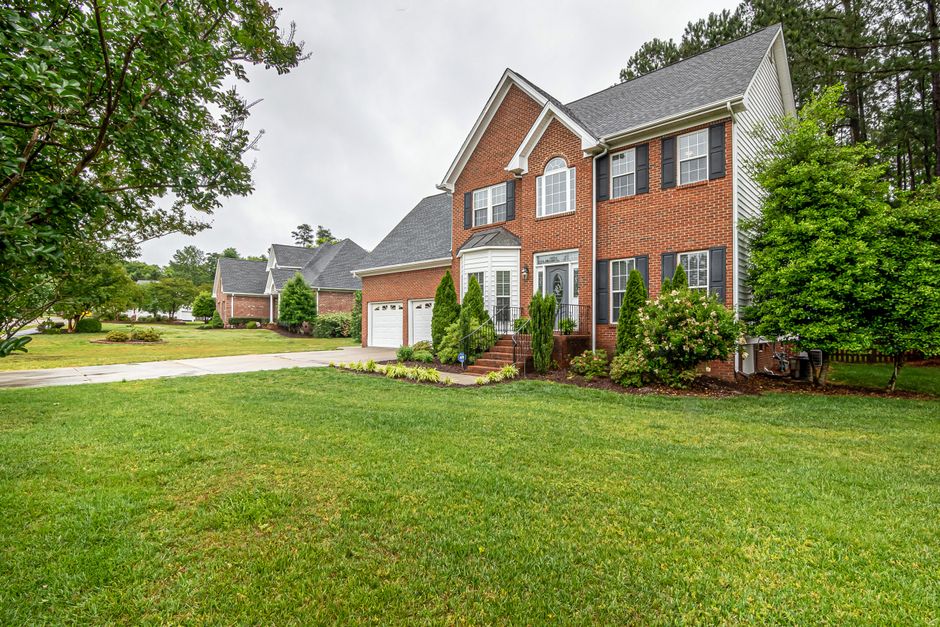
Read the full botanical name and cultivar on the nursery label. A compact cultivar and the straight species may have very different dimensions. Treat listed size as a range influenced by climate and conditions, not as a guarantee that the plant stops at one number.
- Allow enough width that branches do not immediately lean into a path, fence or wall.
- Check expected height against windows, eaves and overhead services.
- Place trees where roots and canopy have a realistic long-term soil volume.
- Reject a selection that depends on frequent hard pruning just to remain in bounds.
A smaller-maturing plant is usually a better compact-yard choice than a vigorous plant promised to be “easy to keep small.”
Map sun, winter moisture and root competition

A narrow side yard may receive direct sun briefly and remain cool the rest of the day. A bed under an eave can be dry while the adjoining area receives concentrated roof runoff. Existing hedges and trees may consume moisture before new plants establish.
- Observe light: note direct sun in morning, midday and late afternoon during the growing season.
- Check drainage: inspect the proposed root zone after sustained rain, not only when the surface looks dry.
- Find existing roots: shallow feeder roots can make a seemingly empty bed difficult to plant and water.
- Review irrigation: confirm that water can reach new root balls without soaking walls, paving or plants that prefer drier soil.
If water lingers or soil smears into a dense layer, use the yard drainage check before selecting plants.
Build a simple structural, shrub and ground-layer palette

Start with the plant that does the most important job: shade, screening, winter structure or a focal point. Add a limited shrub layer and repeat a compatible low layer. Repetition makes the garden feel intentional and reduces the temptation to fill every temporary gap.
Useful layers
- one appropriately scaled tree or upright structural shrub;
- a repeated middle layer for seasonal interest or screening;
- a low edge or ground layer that keeps sightlines open;
- optional bulbs or annuals for change without adding woody bulk.
Common clutter signals
- several plants competing to be the focal point;
- single specimens with conflicting moisture needs;
- temporary gaps filled without allowing for mature spread;
- vigorous spreaders chosen because the pot looked small.
Check unfamiliar vigorous plants against current provincial invasive-species information. Fast coverage is not automatically responsible coverage.
Protect paths, views and working access
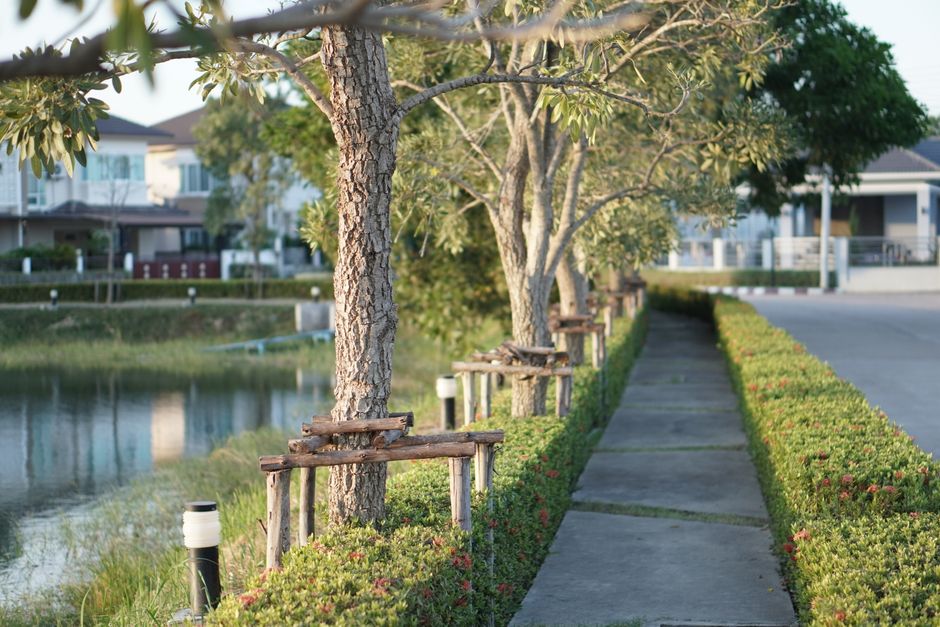
Place taller material where it will not close an important sightline from a door, seating area or driveway. Keep thorny, stiff or brittle branches away from narrow routes. Where screening is needed, decide the exact height and depth required before defaulting to a conventional full-size hedge.
- Keep the path's finished usable width after expected plant spread.
- Leave room behind shrubs to inspect fences, walls and drainage where necessary.
- Preserve visibility at steps and changes in grade.
- Use root-relative site information such as the plants and planting options page when comparing installation scope.
Choose maintenance you can perform in the available room

Compact does not always mean low maintenance. Some dwarf cultivars grow slowly; others remain smaller but still need precise pruning, cleanup or steady moisture. Ask what work the mature planting creates and whether that work can be done without standing in another plant or blocking the only path.
- Group plants with similar water needs so one small bed does not require several conflicting schedules.
- Leave soil visible around new root balls so moisture can be checked during establishment.
- Use an even mulch layer while keeping trunks and crowns clear; the mulching guide explains the placement.
- Plan access for leaf cleanup, deadheading and pruning before plants knit together.
Use containers where flexibility matters more than permanence

Containers are useful beside seating, on paved areas and where a seasonal plant needs to move. They are not maintenance-free: roots experience faster temperature and moisture swings, and the mature container can become too heavy to relocate.
Good container use
Seasonal colour, herbs, tender accents and movable screening can earn their footprint when drainage and watering are practical.
Poor container use
A pot should not be used to force a large woody plant into an undersized permanent space with no winter or watering plan.
Drainage
Every container needs an open drainage path that does not stain, flood or create a slipping hazard on the surface below.
Scale
Count the full outside diameter and access around the pot when testing the layout, not only the plant's current canopy.
Test the finished plan before buying
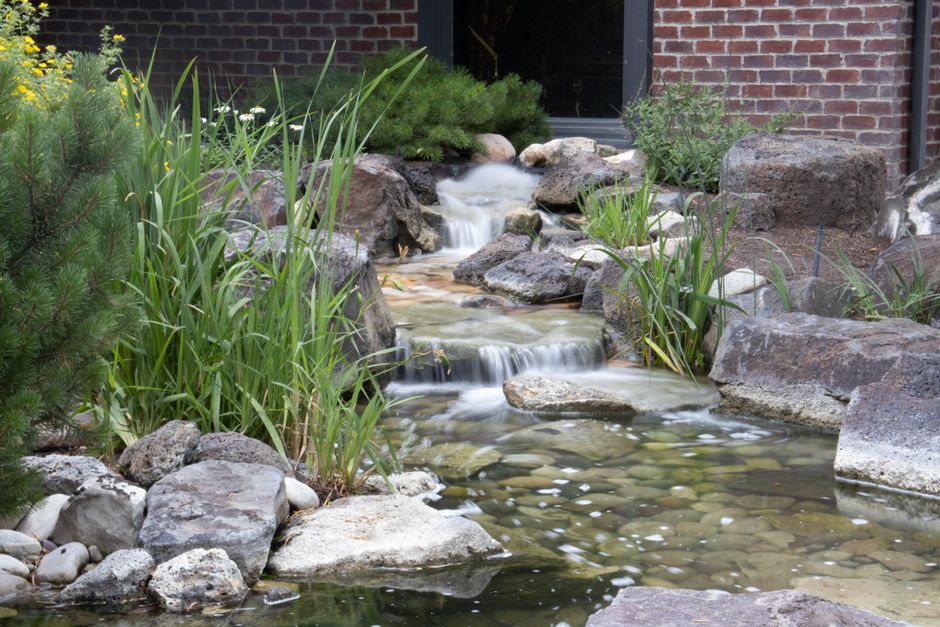
Mark mature plant circles on the ground with hose, cardboard or removable stakes. Walk every route, open every gate and look from the main windows. This inexpensive test exposes crowding that a flat sketch can miss.
Proceed when
- fixed clearances remain usable at mature plant size;
- light, winter drainage and water access suit each selection;
- the palette has a clear structure and restrained repetition;
- maintenance can be performed without dismantling the planting.
Simplify or redesign when
- the plan depends on constant pruning to preserve access;
- several plants compete for the same limited root volume;
- drainage, utilities or existing roots remain uncertain;
- every gap has been filled at installation size.
Bring a measured sketch, photos from different times of day and the botanical names of plants already on site when you request advice. Atkinson Landscaping can review the site when a compact yard needs planting, access and drainage decisions resolved together.
References and further reading
- International Society of Arboriculture: Choosing the Right Tree
- City of Surrey: Tree watering and care
- Province of British Columbia: Priority invasive plants