

The short answer: diagnose the space before choosing plants
Under a mature cedar, the limiting factor is often a combination of year-round shade, intercepted rainfall, and an established root system—not simply “acidic cedar soil.” Observe where light reaches the ground, check moisture below the surface in summer, and leave major roots and the trunk flare undisturbed. Plant only in workable pockets with small nursery stock. Where the canopy is very low, roots fill the surface, or irrigation cannot be managed, a clean mulch layer or movable containers are usually safer than forcing an underplanting.
- Plant carefully: filtered light reaches the ground, small holes can be opened without cutting woody roots, and establishment water can be delivered.
- Simplify the plan: only scattered pockets are plantable; repeat a few dry-shade plants rather than filling every square metre.
- Use mulch or containers: the ground is deeply shaded, packed with roots, persistently dry, or close to the trunk.
The bare area beneath a cedar is useful evidence. In Surrey, Langley, and White Rock, wet winters can make the rest of a yard look well supplied with water while dense evergreen foliage sheds or intercepts rain. The same bed may become genuinely dry once the Lower Mainland enters its summer dry period. A successful design respects the existing tree first and treats the understory as a demanding microclimate, not an empty bed waiting to be filled.
Map light, branches, and plantable pockets through the day
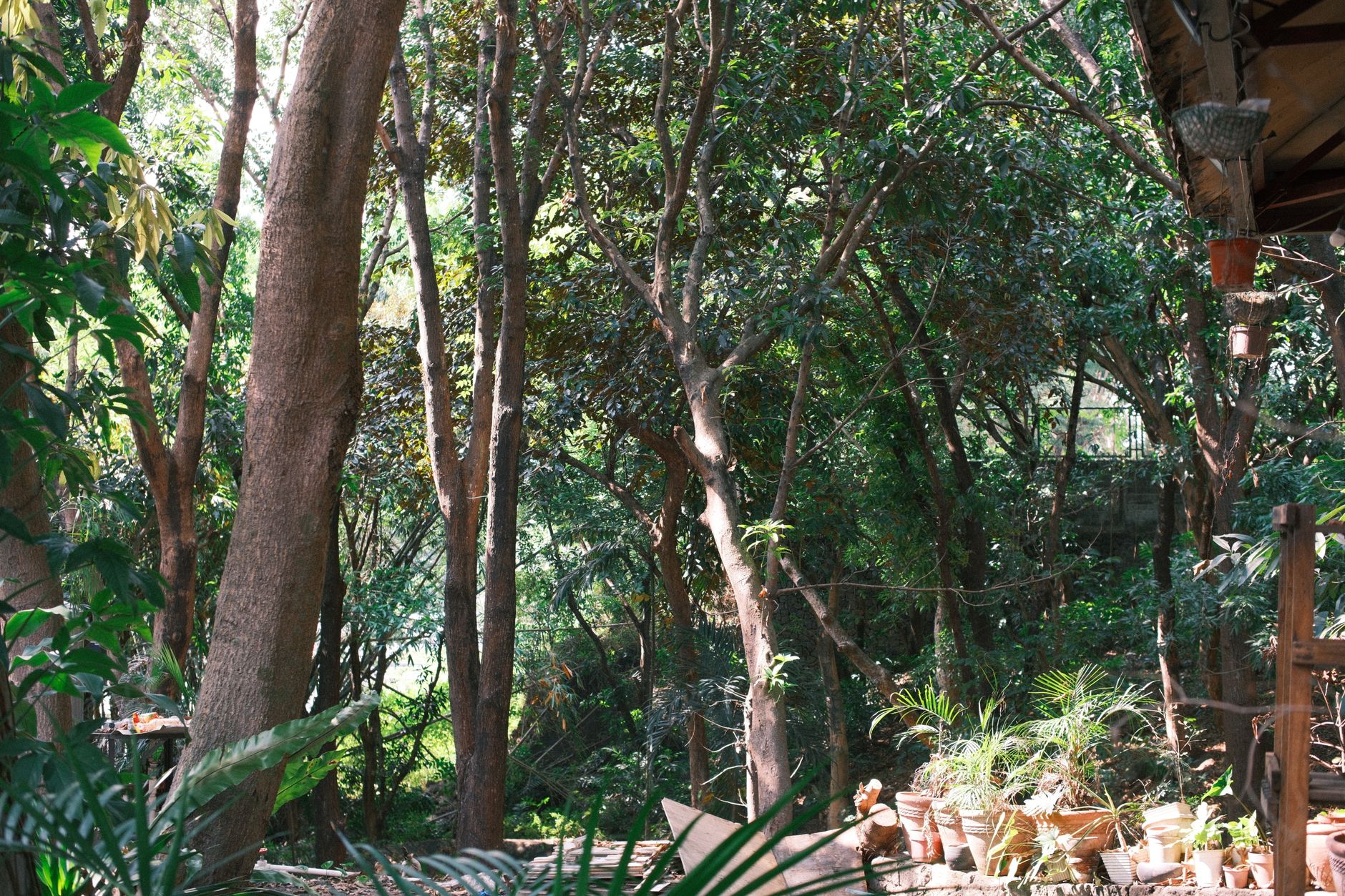
Start by watching the area in morning, midday, and late afternoon. University of Minnesota Extension separates dappled shade from part shade, full shade, and deep shade because those conditions support different plants. Under an evergreen canopy, also note whether low branches block winter light, whether the bed sits in a building’s rain shadow, and whether nearby paving reflects extra heat into one edge.
Draw the trunk, visible surface roots, drip line, paths, fences, and the brighter openings between branches. Do not assume the whole footprint has one condition. The outer canopy may support a restrained ground layer while the dark, root-dense area near the trunk remains unplanted.
Promising pocket
- dappled or indirect light reaches the ground;
- soil can be opened with a hand tool between roots;
- water can be applied without soaking the trunk;
- plants will not obstruct access or cedar inspection.
Leave unplanted
- almost no daylight reaches the soil;
- large roots occupy the surface;
- the space is tight against the trunk flare;
- planting would require branch or root damage.
Check summer moisture instead of assuming all shade is damp
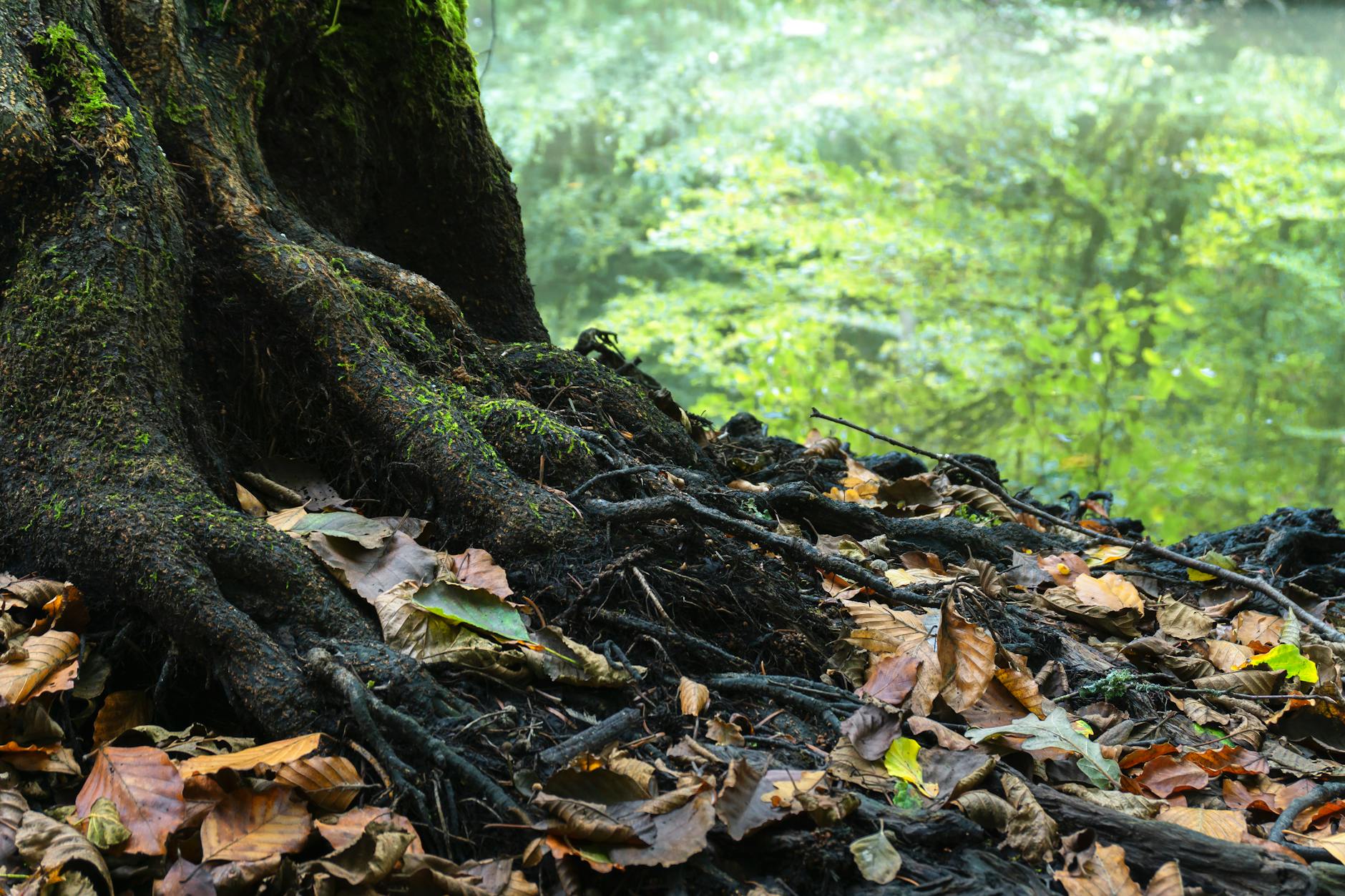
Push a narrow trowel or soil probe into several candidate pockets after ordinary rain, then repeat during a dry spell. Check below the loose needle and leaf layer rather than judging from the surface. Mature tree roots use a large soil volume, and evergreen foliage can keep rainfall from reaching the bed evenly. WSU Extension notes that western Washington combines wet, mild winters with a pronounced dry summer period; newly installed plants still need establishment water even when their eventual selection is drought tolerant.
Also separate dry shade from poor drainage. A low spot beyond the canopy may stay saturated in winter while the inner bed is dry. If water lingers, follow the site checks in the Lower Mainland drainage guide before selecting plants. Do not use a dry-shade list to solve a wet clay pocket.
- Dry soon after rain: expect strong interception or root competition and plan targeted watering.
- Evenly moist, never stagnant: a wider range of shade plants may be possible.
- Waterlogged in winter: correct the drainage issue or keep planting out of that pocket.
Protect the cedar roots and keep the trunk flare visible
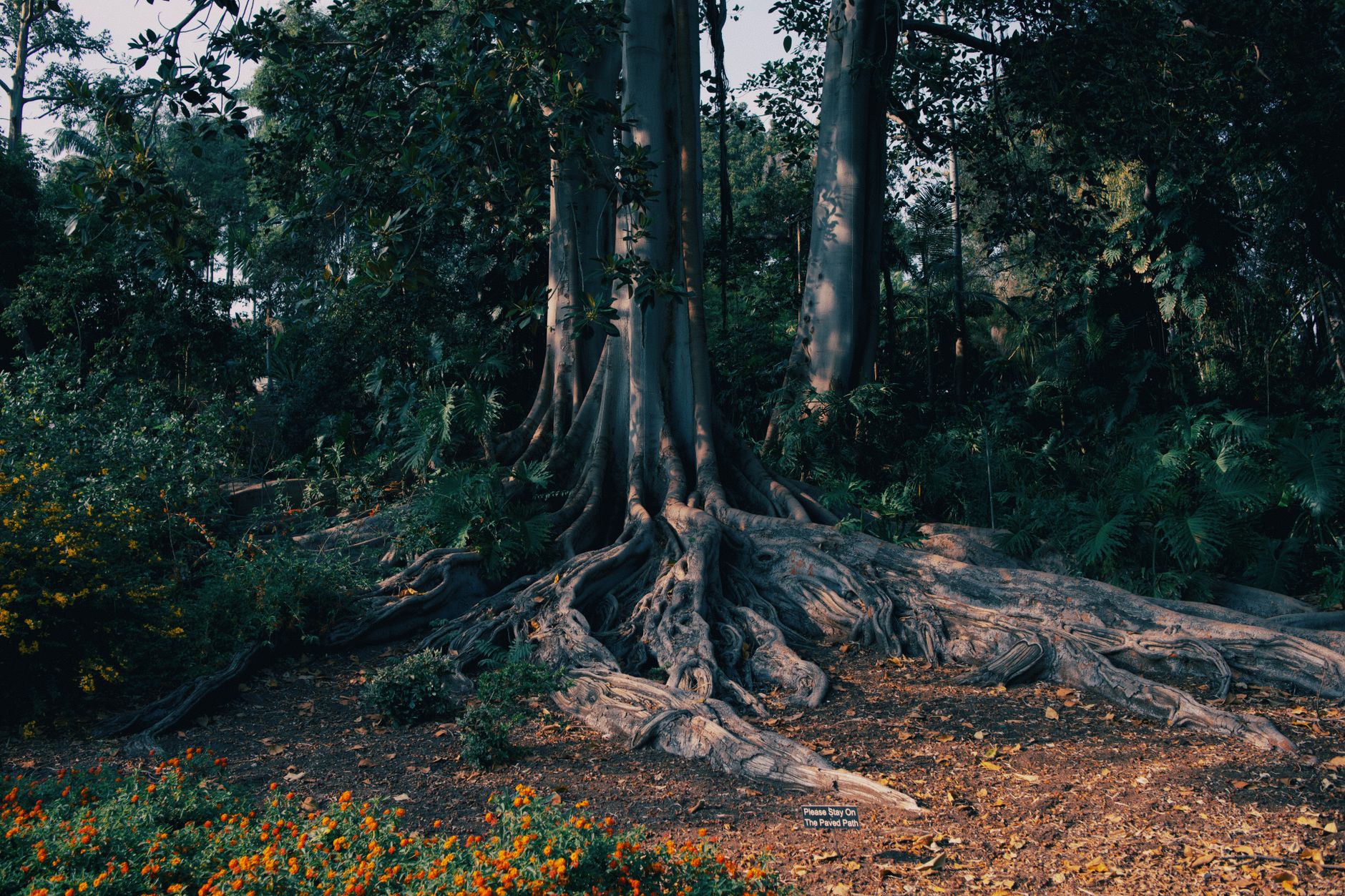
Do not build a raised bed over the root zone, bury exposed roots, pile soil around the trunk, or cut large roots to make room for a preferred shrub. Penn State Extension warns that deep added soil can reduce gas exchange around roots and hold moisture against bark. Keep the root flare visible and work with the existing grade.
Remove weeds by hand and open only small holes with a hand trowel. If a woody root blocks a position, refill the hole and move the plant; do not turn a planting layout into root surgery. Avoid rototilling, deep edging, trenching irrigation through major roots, or excavating one continuous bed beneath the canopy.
Low-disturbance work
- small holes placed between roots;
- plugs, small pots, or modest divisions;
- surface mulch kept away from the trunk;
- hand watering routed around exposed roots.
Stop and redesign
- a root must be severed to fit the plant;
- the plan needs a new raised grade;
- soil or mulch would cover the flare;
- equipment would compact the rooting area.
Choose for dry shade, mature size, and local behaviour
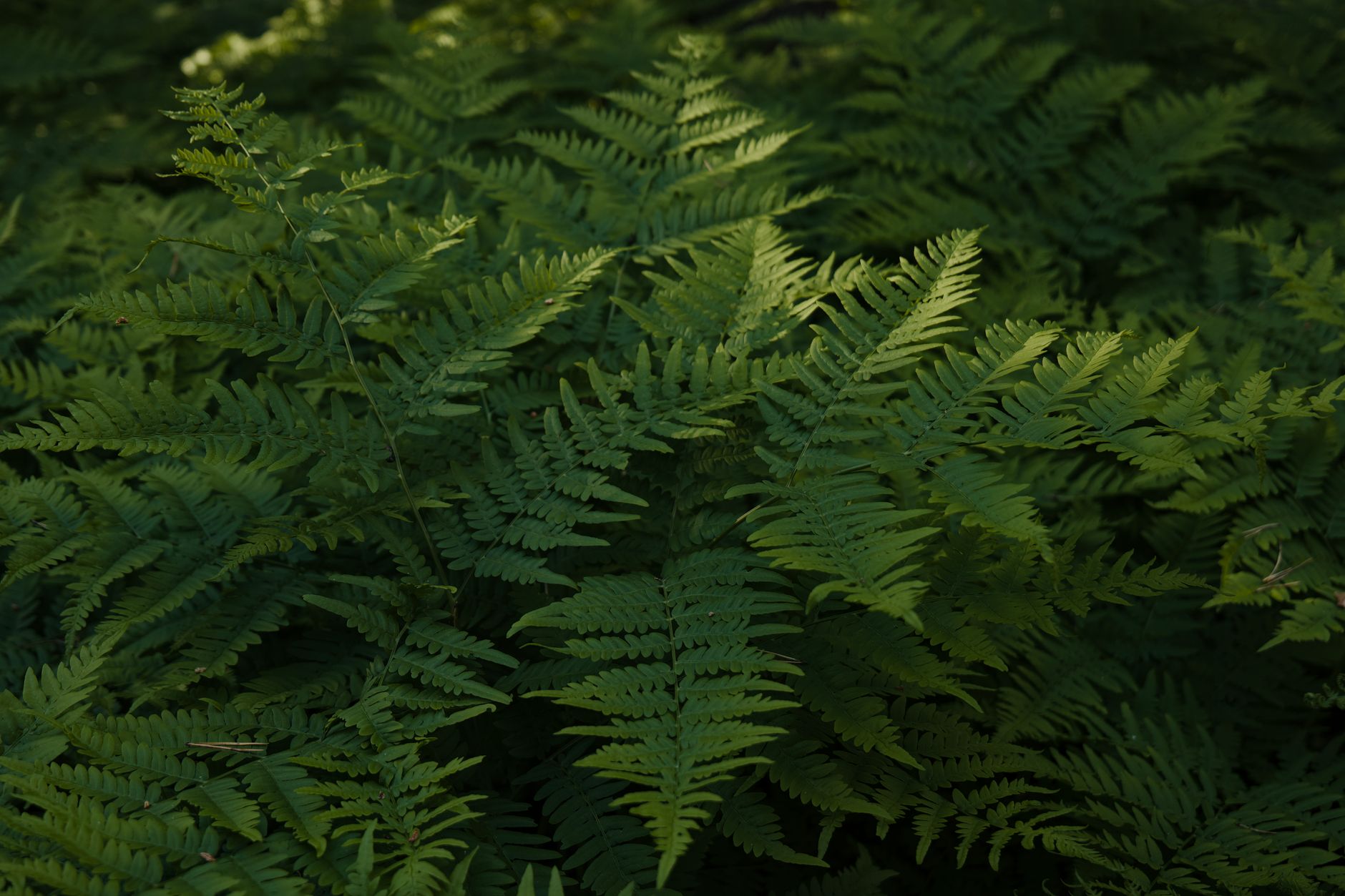
Use the measured conditions, not the word “shade,” to filter nursery choices. Look for plants that tolerate the actual light level and the bed’s summer moisture after establishment. Check every tag for mature width, hardiness, soil preference, and whether the named cultivar differs from the species. The existing shady-yard plant guide provides a broader selection process.
In workable dry-shade pockets, candidates may include suitably hardy Epimedium, selected Helleborus, dry-tolerant Polystichum or Dryopteris ferns, bigroot geranium (Geranium macrorrhizum), or compatible sedges. These are categories to investigate, not a universal shopping list. Nursery tags and site-specific advice still matter, especially where deer pressure, irrigation, pets, or a very narrow bed changes the decision.
Reject invasive shortcuts. Metro Vancouver identifies common periwinkle (Vinca minor) as an invasive groundcover that escapes gardens and forms dense mats in forests. English ivy is also a poor answer around valuable trees. A plant’s ability to survive difficult shade does not make it responsible to plant.
Install small plants in groups rather than digging for instant fullness
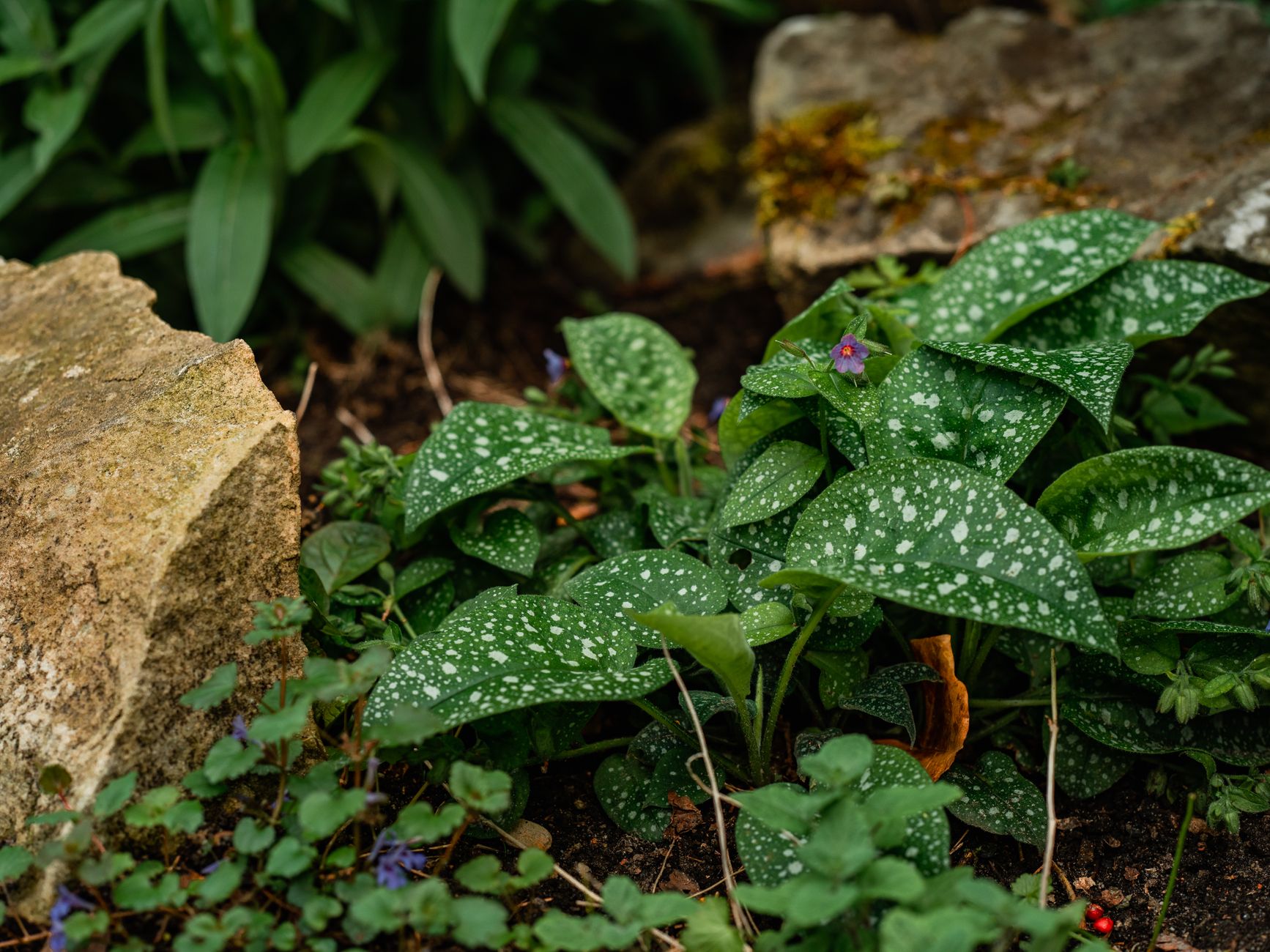
Choose small, healthy stock whose root ball fits the existing openings. Set pots on the soil first, then adjust the pattern when a surface root or dry pocket makes a position unsuitable. Repeat two or three compatible plants in loose groups rather than collecting one of everything. Repetition gives a calm result and makes uneven survival easier to read.
- Water nursery pots before planting and confirm each label.
- Probe the intended positions gently with a hand trowel.
- Move any position blocked by a substantial woody root.
- Plant at the depth each plant grew in its container.
- Backfill without stamping or changing the surrounding grade.
Do not plant right against the cedar trunk. Leave an open inspection zone around the flare, preserve access, and accept unplanted space as part of the composition. More plants are not automatically a better understory.
Water the new understory by soil feel, not by rainfall totals
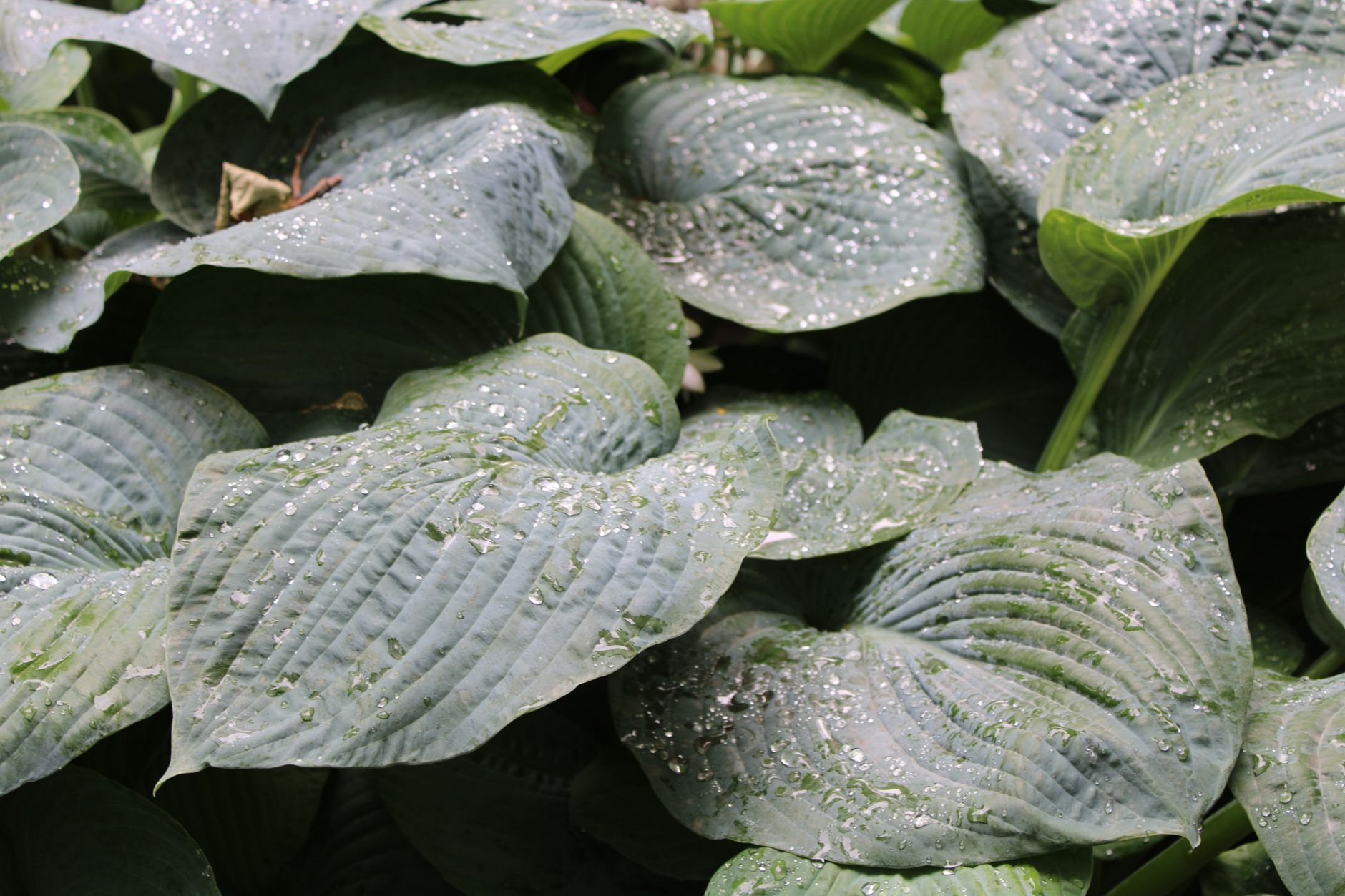
Water every new root ball thoroughly after installation. During establishment, check the root-ball soil and nearby native soil separately: potting media can dry while surrounding soil still feels cool, and canopy drip can wet one band while missing another. Apply water slowly at the plant, then confirm that it penetrated rather than running across compacted surface soil.
Reduce frequency when cool, wet weather arrives, but do not put the bed on an automatic calendar and forget it. Newly installed plants can need supplemental water through their first dry seasons even when selected for eventual dry-shade tolerance. The watering guide for new landscape plants explains the same hands-on moisture check.
- Too dry: the root ball is dry below the surface, leaves lose firmness, or water initially sheds away.
- Too wet: the hole smells stagnant, remains saturated, or foliage yellows while soil stays wet.
- On track: moisture changes predictably, roots remain covered, and new growth is steady rather than forced.
Use a light surface mulch and let some leaf litter work

After planting, apply a light, even organic mulch layer across exposed soil while keeping it clear of the cedar trunk and plant crowns. Do not bury surface roots or top up the bed every year without checking the existing depth. The goal is moisture moderation and reduced weed competition, not a thick decorative mound. See the tree and shrub mulching guide for the repair sequence when mulch has accumulated.
Ordinary fallen leaves can remain in a loose layer where they do not smother small evergreen plants. Remove deep, matted accumulations selectively rather than stripping the bed bare. Avoid aggressive raking across exposed roots, and keep the trunk flare easy to inspect.
- Good finish: thin, loose, continuous, and pulled back from bark and crowns.
- Too much: roots disappear, stems stay damp, or the new grade rises around the trunk.
- Needs adjustment: leaves mat over small plants or irrigation cannot reach the soil evenly.
Use containers or mulch when the ground should not be planted
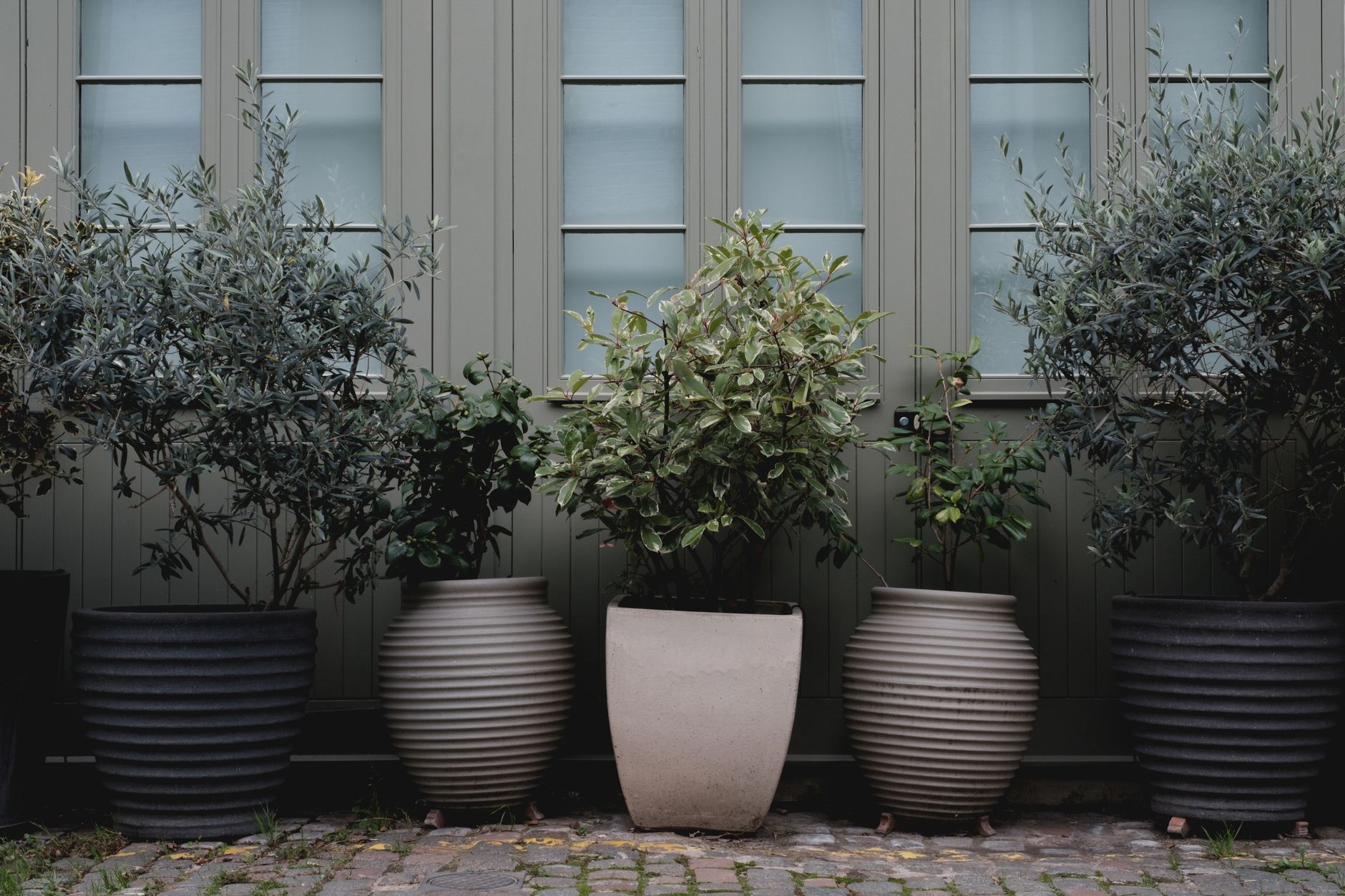
A mulch-only bed is a legitimate landscape decision. It protects the cedar’s root zone, keeps the trunk visible, and can look intentional when its edge, depth, and surrounding path are clean. Where greenery is still wanted, containers can avoid competition with tree roots, as University of Minnesota Extension suggests for difficult shade near trees and shrubs.
Choose pots large enough to hold moisture, provide drainage, and select plants for the measured light. Containers beneath an evergreen canopy may receive less rain than nearby exposed pots, so they still require direct checking. Keep them off major roots, away from the trunk, and positioned so their weight does not compact one sensitive spot indefinitely.
Proceed with a small understory
- light and moisture have been observed;
- small root-free pockets exist;
- non-invasive plants fit the conditions;
- establishment water is realistic.
Choose the simpler finish
- roots occupy nearly every opening;
- the canopy creates deep year-round shade;
- the tree already shows stress or decline;
- watering and access cannot be managed safely.
If the cedar’s condition, grade, roots, or drainage makes the choice uncertain, Atkinson Landscaping can review the site before an attractive underplanting idea becomes damage to the more valuable tree.
References and further reading
- Penn State Extension: Underplanting Trees—Respect the Roots
- University of Saskatchewan: Soil pH under conifers
- University of Minnesota Extension: Gardening in the shade
- Washington State University Extension: Drought-Tolerant Landscaping for Washington State
- Metro Vancouver: Common Periwinkle Factsheet